Aesthetic Clinic AI Voice Service: Automate Appointments, Follow-ups, and Treatment Reminders

Brandon Lu
COO
The front desk phone at a medical aesthetics clinic is one of the highest-stakes, most neglected touchpoints in the business. Every call that comes in — "how much is fractional laser?" "how many sessions of picosecond will I need?" "are there any current promotions?" — is a potential paying client. But while the phone is ringing, the same staff member is managing walk-in consultations, preparing the physician's room, and processing checkout.
Medical aesthetics AI appointment automation isn't about replacing physician consultations. It's about handling the outer layer — initial inquiry responses, scheduling, and post-treatment follow-up — so that your human team can focus entirely on the interactions that require clinical expertise and personal relationship.
The Phone Service Problem in Medical Aesthetics
Aesthetic clinics have a call profile that's distinct from general healthcare:
High value, high anxiety
Clients calling a medical aesthetics clinic are often asking questions that feel personal and vulnerable — "I have some pigmentation issues, which treatment would work best?" "My skin is sensitive, am I a good candidate?" These calls require warmth and specificity, not a recording. But that also means the line between calls that need a human and calls that can be standardized is actually quite clear.
Rapidly changing treatment menus
New devices, new protocols, seasonal promotions, bundled packages — the information front desk staff need to answer basic inquiries changes constantly. If that information lived in an AI-queryable knowledge base rather than a binder or a group chat thread, every call could be answered accurately and consistently.
Follow-up is the revenue engine — and the most neglected workflow
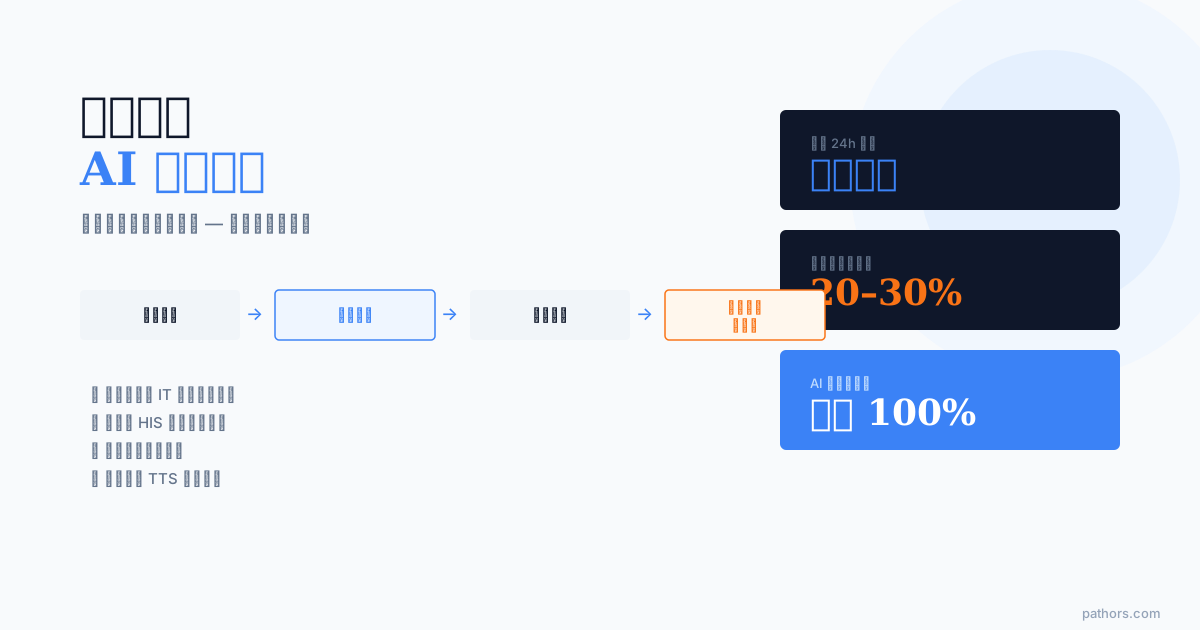
In aesthetic medicine, retention and rebooking are driven by follow-up. The post-treatment recovery check, the 2-week effect evaluation, the reminder for the next session in a multi-treatment protocol — done consistently, these touchpoints dramatically increase client lifetime value. Done manually, the execution rate is typically 20–30%, because staff don't have time.
Three Core AI Applications for Aesthetic Clinics
Application 1: Initial Inquiry and Appointment Scheduling
Most first calls follow a predictable pattern: the caller wants to understand what you offer and what it costs. This doesn't require the physician. It requires accurate, warm information delivery.
A voice AI assistant can:
For callers with questions that genuinely require clinical assessment, the AI offers a clear path: "I can book you in for a complimentary consultation with one of our advisors — would that be helpful?" This is the standard conversion funnel in aesthetic medicine, and AI handles the handoff smoothly.
Application 2: Post-Treatment Follow-Up and Care Tracking
The highest-impact follow-up windows in aesthetic medicine:
24–48 hours post-treatment: Confirm recovery is proceeding normally, remind clients of care instructions (sun avoidance, specific product restrictions). This call has a disproportionate impact on client satisfaction scores — far more than most clinics realize.
2 weeks post-treatment: Ask about visible results and address any concerns early. If outcomes are below expectation, early intervention prevents negative reviews and demonstrates genuine care.
60 days post-treatment: For multi-session protocols (laser resurfacing, RF lifting), the AI calls to recommend the next session and completes the booking on the spot.
All three windows can be triggered automatically by Pathors based on treatment completion records in the clinic CRM — no manual tracking by front desk staff.
Application 3: Promotional Campaign Outreach
Clinics run seasonal offers, device demonstration events, and new treatment introductions. The target audience for these campaigns is sitting in the client database. But LINE broadcast messages get low engagement.
Outbound AI calls reach clients at 3–5x the actual contact rate of push notifications. Targeted calls to clients with relevant treatment history ("you've done X before — we're offering a special package that pairs well with it") convert meaningfully better than mass message blasts.
Aesthetic Clinic-Specific Design Considerations
Voice AI for medical aesthetics has requirements that differ from general contact center deployments:
Tone calibration: Aesthetic clients have very low tolerance for robotic-sounding voice systems. The AI voice must feel warm, relaxed, and consultative — not like an IVR. TTS voice selection and speech pacing are critical design decisions.
Sensitive data handling: Treatment records, treatment areas, skin condition notes — these are sensitive personal health data. Outbound scripts must reference previous visits obliquely ("your last appointment with us") rather than naming specific procedures ("your picosecond session").
Physician brand loyalty: Many aesthetic clients book specifically for a particular physician. The scheduling flow must support physician preference selection, and when a preferred physician has no availability, the AI needs to handle that gracefully — not bluntly push alternative physicians.
How Pathors Serves This Use Case
Pathors' voice AI platform provides aesthetic clinics with:
For a mid-size aesthetic clinic serving 300–500 clients per month, Pathors deployment typically reaches breakeven within 2–3 months.
Summary
The phone line at a medical aesthetics clinic is a hidden revenue channel. When that channel is slow to respond and inconsistent in follow-up, clients migrate toward competitors who are more proactive.
AI voice customer service addresses more than phone efficiency — it ensures that every node in the client journey has a response at the right moment, whether that's a first inquiry, a post-treatment check-in, or a timely reminder that the next session is due.
Brandon Lu
COO
Passionate about leveraging AI technology to transform customer service and business operations.
Ready to Transform Your Call Center?
Schedule a personalized demo and see how Pathors can revolutionize your customer service
Pathors empowers businesses with intelligent voice assistant solutions, streamlining customer service, appointment management, and business consulting to enhance operational efficiency.
Backed by leading accelerators & programs