
When booking messages and phone calls pile up faster than anyone can answer them, the AI customer service options available to hospitality fall into three categories: text-based systems that cover LINE and OTA inboxes, in-room voice systems that cover the guest room, and phone AI that covers the calls coming in. Each solves a problem at a different point in the guest journey, and getting the order wrong is why some properties feel they deployed something and noticed nothing.
A 180-room hotel in Taichung installed an AI voice assistant in January 2026. Within the first month, the system handled 73% of inbound phone calls without transferring to a human agent. The front desk team, which had been answering roughly 320 calls per day, suddenly had four extra hours of collective bandwidth. They did not lay anyone off. Instead, the staff spent that time on guest interactions that actually required a human touch — resolving complaints, making personalized restaurant recommendations, and greeting VIP arrivals in person. That shift, from phone-bound to guest-facing, is the real story of AI voice in hospitality. The technology is mature enough to handle the repetitive calls. The question now is whether hotels are organized to take advantage of the time it frees up.
How to Choose an AI Customer Service System for Hotels: Three Categories Compared
Comparison only becomes useful once the market is sorted into categories. What hotels encounter under the label AI customer service is really three different products, each guarding a different channel:
| Category | Channel it covers | What it typically does | When to deploy it first |
|---|---|---|---|
| Text-based AI support | LINE, your website, OTA inbox messages, Facebook Messenger | Replies to booking enquiries, sends stay information, pushes updates | Message volume exceeds call volume, bookings are mostly online |
| In-room voice / digital butler | In-room smart speakers, in-room tablets, guest web app | In-room requests, facility questions, property navigation, upsells | You already have in-room devices, or rooms are being refurbished |
| Phone AI support | Inbound and outbound telephone calls | Bookings, availability, check-in and checkout policy, reschedules, early check-in, after-hours answering | The phone is still the main inbound channel and peak hours go unanswered |
The three do not conflict, and most properties end up running at least two. Pathors focuses on the third — calls coming in and calls going out. In-room devices and digital-butler style products — Aiello is the best-known example in this category — cover the experience after the guest has already arrived; the two solve different problems at different points in the stay.
The most practical way to choose is to look at your own inbound mix first. If seventy percent of enquiries arrive through LINE and OTA inboxes, start with text. If the front desk phone rings two or three hundred times a day and peak hours go unanswered, start with phone AI. If complaints cluster around guests in their rooms who cannot find anyone to ask for something, that is when in-room devices are the right answer.
What Hotel Guests Are Actually Calling and Messaging About
Deciding what to automate first requires knowing what the inbound mix looks like. Drawing on deployment observations across the Asia-Pacific hospitality market, a mid-sized hotel's inbound traffic breaks down roughly like this:
| Enquiry type | Approximate share | Characteristics | Suitable for AI? |
|---|---|---|---|
| Bookings, availability and rates | 30-35% | Highly repetitive, but needs live inventory | Yes, provided the PMS is connected |
| Check-in / checkout policy and facilities | 25-30% | Almost entirely repetitive | Best fit — automate first |
| Transport, parking and the neighbourhood | 12-15% | Repetitive but needs local knowledge | Yes, with a local knowledge base |
| Booking changes and special requests | 10-15% | Requires judgement | Partly — escalate complex cases |
| Complaints and emotional calls | Around 5% | Requires empathy | No — route straight to a person |
| Other (staff, suppliers, admin) | 5-10% | Miscellaneous | Yes, for routing |
Add the first three together and you get roughly seventy percent of inbound volume, all of it sharing one trait: the answers are fixed, they simply need someone available at all times. That is exactly what phone AI is best at, and the part that carries the least risk.
The messaging mix looks different. LINE and OTA inbox questions cluster around pre-booking comparison and confirmation, and guests broadly accept a non-instant reply — which is precisely why so many properties overlook the message backlog. Messages do not ring in your ear.
Running Messaging and Phone Together
The most common failure in practice is not the AI giving a wrong answer. It is the same guest asking on LINE, then calling to ask again, and getting two different answers.
Avoiding that works on three levels.
Level one: one knowledge base, not two. Check-in and checkout times, pet policy, extra bed charges, parking rules — this content should be maintained exactly once, with phone AI and text support both drawing from the same source. Maintain them separately and they start diverging on day two.
Level two: records converge. Whichever channel the guest arrives through, call summaries and message threads should be written back to the same guest profile. That is what lets the front desk see that this guest asked the same question on LINE half an hour ago.
Level three: divide the channels deliberately. Anything that needs an immediate answer or an on-the-spot confirmation — is there a room tonight, what time can I check in — belongs on the phone. Anything that can wait and benefits from links and images — room type comparisons, directions, event sign-ups — should be directed to messaging. Build both channels to answer everything and you will end up doing both badly.
The Phone Problem in Hospitality
Hotels are one of the most phone-dependent businesses still operating in 2026. Despite the rise of booking apps and chat widgets, the phone remains the primary contact channel for guest inquiries before, during, and after a stay.
A 2025 study by the Asian Hospitality Technology Association surveyed 340 hotels across Taiwan, Japan, and Southeast Asia. The findings were striking:
The math is straightforward. If a 200-room hotel receives 350 calls daily and 60% are routine, that is 210 calls that could be handled by a system that never takes a break, never puts someone on hold, and never sounds rushed at 4:47 PM during a check-in rush.
But here is the part most technology vendors skip over: the problem is not just volume. It is timing.
The Timing Mismatch
Hotel call volume peaks exactly when front desk staff are busiest with in-person guests. Between 2 PM and 5 PM, a front desk agent might be simultaneously checking in a family, answering a phone call about late checkout, and dealing with a room key that will not work. Something gives. Usually, it is the phone.
After-hours calls present a different challenge. A 2025 survey by Taiwan's Tourism Administration found that 34% of booking-related calls to hotels come outside of standard front desk hours (before 7 AM or after 10 PM). Many properties route these to a night auditor who is already handling other responsibilities, or to voicemail, which in 2026 feels about as modern as a fax machine.
How AI Voice Solves Hospitality's Core Call Challenges
AI voice assistants in hospitality work differently from the robotic IVR menus that hotels have tried (and guests have hated) for decades. Modern systems use conversational AI that understands natural speech, handles follow-up questions, and speaks in a natural cadence.
Here is how they address each major pain point:
Automating Repetitive Inquiries
The 60% of calls that are routine questions become the easiest wins. An AI voice assistant can:
The key metric here is first-call resolution rate. Well-configured hotel AI voice systems resolve 65-78% of routine inquiries on the first interaction, without any transfer to a human agent. That is not a projection — it is the range we see across deployments in the Taiwan and APAC hotel market.
Handling Multilingual Guests
This is where hospitality gets complicated. A hotel in Taipei might receive calls in Mandarin, English, Japanese, Cantonese, and Korean on any given day. Hiring multilingual front desk staff for every possible language combination is expensive and impractical.
AI voice assistants can detect the caller's language within the first 2-3 seconds of speech and respond accordingly. For properties in Taiwan, the critical capability is handling Taiwanese-accented Mandarin accurately (not defaulting to a mainland Mandarin model that misunderstands local expressions and place names).
The multilingual angle matters for revenue too. A 2025 Booking.com report found that guests who can communicate in their preferred language during the booking process are 2.3x more likely to complete a reservation compared to those who encounter a language barrier. For the technical detail and how to test it, see the complete guide to multilingual AI customer service.
Managing After-Hours and Overflow Calls
AI voice assistants do not sleep. That simple fact solves the after-hours problem entirely. Every call gets answered on the first ring, at 2 AM or 2 PM, with the same quality of response.
For overflow during peak hours, the AI handles the queue while front desk staff focus on in-person guests. No hold music. No abandoned calls. No frustrated guests who called three times before giving up and booking elsewhere.
One property we work with measured a 91% reduction in call abandonment after deploying AI voice for overflow handling. Their previous abandonment rate during the 3-5 PM check-in rush was 26%. It dropped to 2.3%.
The effect is visible immediately.
Proactive Outbound Communication
AI voice is not limited to answering calls. Hotels are increasingly using outbound AI voice for:
The outbound use case is underrated. Most hotels focus on inbound automation first (which makes sense), but the outbound capabilities often deliver the faster ROI.
What a Practical Deployment Looks Like
Theory is great. Here is what actually happens when a hotel deploys AI voice.
Week 1: Configuration and Integration
The AI voice system connects to the hotel's PMS (the most common in Taiwan are systems from local providers, though international platforms are also supported). This integration allows the AI to access real-time room availability, pricing, guest profiles, and reservation details.
The hotel's operations team configures the conversation flows — what questions the AI can handle, when to transfer to a human, what tone and personality the AI should use. For most properties, this takes 3-5 days.
(No coding required, which matters because hotel IT teams are typically one or two people who are also managing the Wi-Fi, the point-of-sale system, and whatever just broke in the business center.)
Week 2: Soft Launch
The AI handles a portion of inbound calls — typically starting at 30% — while the team monitors accuracy and guest reactions. This is the calibration period where the system learns the property-specific terminology. Every hotel has its own vocabulary: the rooftop bar versus Sky Lounge, the parking garage versus B2 parking, and the local landmark directions that only a resident would give — walk out, turn right, and the night market is at the first set of lights.
Week 3-4: Full Deployment
After calibration, the AI handles all inbound calls as the first point of contact. Calls that require human judgment (complaints, special requests, complex booking modifications) are transferred seamlessly to front desk staff with full context of the conversation so far, so the guest never has to repeat themselves.
Ongoing: Optimization
Monthly reviews of call data identify new patterns. Maybe guests are frequently asking about a nearby night market that was not in the original knowledge base. Maybe a new question pattern emerges around a local event. The system updates in minutes, not weeks.
Measuring ROI in Hospitality AI Voice
Hotels are practical businesses. Here is how the numbers typically work:
| Metric | Before AI Voice | After AI Voice (90-Day Average) |
|---|---|---|
| Calls answered within 10 seconds | 64% | 98% |
| Call abandonment rate | 22% | 3% |
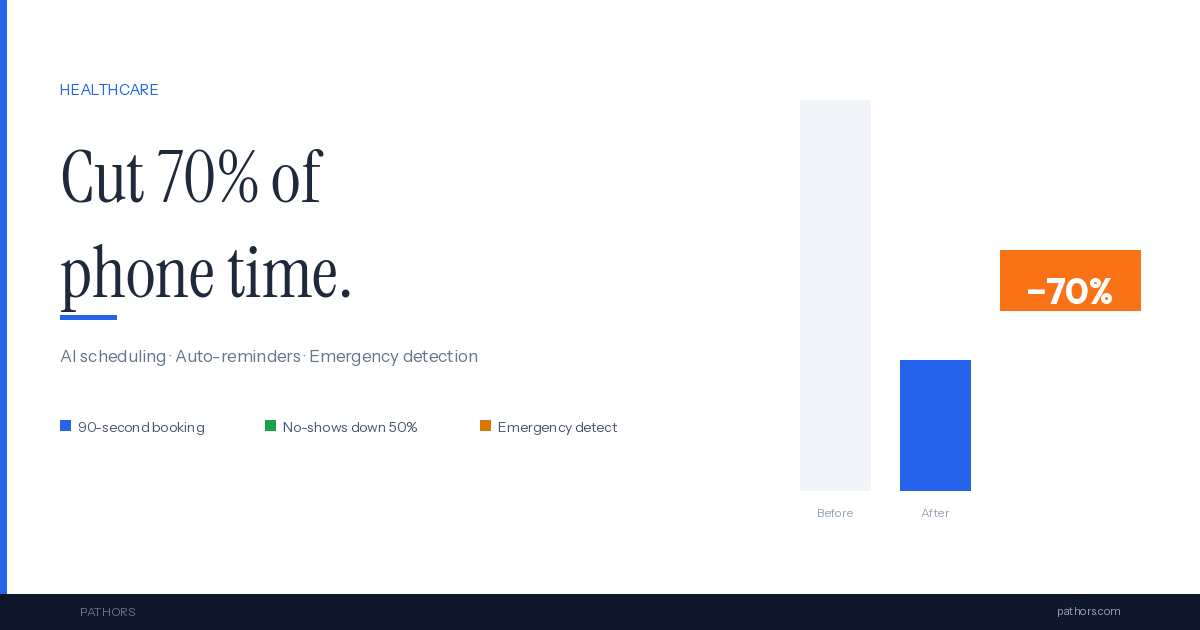
| Average front desk phone time per shift | 4.2 hours | 1.1 hours |
| After-hours calls answered | 41% | 100% |
| Guest satisfaction (phone interaction) | 3.6/5 | 4.2/5 |
| Revenue from phone bookings | Baseline | +18% |
The revenue increase comes from two sources: capturing previously lost calls (especially after-hours) and the improved conversion rate when callers get immediate, accurate answers instead of hold music.
For a 150-room hotel with an average daily rate of TWD 3,800, capturing even 5 additional bookings per week from previously abandoned calls generates roughly TWD 76,000 in incremental monthly revenue. The AI voice system typically pays for itself within the first 45-60 days.
What to Look For in a Hotel AI Voice Platform
Not all AI voice platforms are equal when it comes to hospitality. Here are the capabilities that separate useful tools from expensive experiments:
PMS Integration Depth
Surface-level integration (just pulling room types and rates) is not enough. The AI needs access to real-time availability, guest history, loyalty program status, and rate restrictions. Deep PMS integration is the difference between I can transfer you to someone who can check and yes, we have a deluxe room available for those dates at TWD 4,800 per night, and as a returning guest you qualify for a 10% loyalty discount.
Natural Conversation Handling
Guests do not speak in keywords. They say things like: I am flying in late on Friday and my wife might get there before me, can she check in? The AI needs to parse that into two guests, different arrival times, and an early check-in request for one party, then respond naturally.
Escalation Intelligence
Knowing when to transfer is as important as knowing how to answer. The AI should recognize emotional cues (frustration, urgency, confusion), complex multi-part requests, and situations that require human empathy — a guest calling about a bereavement rate, for example — and hand off smoothly.
Customizable Voice and Personality
The AI should sound like it belongs at your property. A luxury resort and a budget business hotel need different tones, pacing, and vocabulary. The best systems allow properties to customize the AI's personality without technical expertise.
Ready to see how AI voice works for your property? Pathors offers a free pilot program for hotels — connect your PMS, configure your flows, and measure real results with your actual call traffic before committing.
The hospitality industry's phone and messaging demand is not going away — guests still prefer direct contact for time-sensitive questions, complex requests, and booking confirmations. What is changing is how those inbound contacts get handled. The first step in choosing a system is not comparing feature lists; it is looking at your own inbound mix. Heavy on messages, start with text. Drowning on the phone, start with phone AI. Both overloaded, then consolidate into one knowledge base and write every record back to the same guest profile. The technology is proven, the ROI is measurable within 60 days, and the deployment is simpler than most hotel operators expect.
Further reading: the complete guide to phone AI, the complete guide to multilingual AI customer service, AI voice customer service for travel agencies.
Frequently Asked Questions
Can AI voice assistants handle hotel bookings from start to finish?
Yes. When integrated with the property management system, AI voice assistants can check real-time availability, quote rates, confirm dates, and complete reservations. For complex bookings involving special requests or group reservations, the AI collects initial details and transfers to a human agent with a full summary of the conversation so far.
Can booking enquiries on LINE and Facebook Messenger be automated too?
Yes, but that is a different category of product. Text-based AI support covers LINE, your website, Facebook and OTA inboxes; phone AI covers inbound and outbound calls. Properties frequently run both. What matters most in practice is maintaining a single knowledge base and writing every record back to the same guest profile. Otherwise the same guest asks on LINE, calls to ask again, and easily walks away with two different answers.
How much does an AI customer service system for hotels cost?
The Taiwan market generally quotes in three parts: a one-time build and onboarding fee, a platform monthly fee, and per-minute call charges. Using publicly listed market pricing as a reference point, common bands sit around a build fee in the region of NT$66,000, a monthly fee around NT$5,000, and roughly NT$5 per minute; deep integration with a PMS or booking engine pushes the build fee higher. When comparing quotes, confirm whether the per-minute rate includes carrier charges, what the overage rate is, and whether knowledge base updates are billed separately. For a 150-room property with an average daily rate of TWD 3,800, capturing five extra bookings a week from previously abandoned calls typically puts payback in the 45 to 60 day range.
Can AI customer service integrate with the PMS we already use?
Yes, and this is what decides whether it is genuinely useful. AI with no PMS connection can only recite fixed information, and it stalls the moment someone asks whether there is a room available tonight. Integration usually runs through an API or an intermediate booking engine to reach live availability, rates, guest history and reservation detail. During evaluation, establish whether access is read-only or read-write (can it actually create and modify reservations), and whether the integration is a one-time build or an ongoing maintained connection. Most local Taiwanese PMS products and international platforms have a workable path, but the engineering effort varies widely, so confirm it at the quotation stage.
Do guests know they are talking to an AI, and how do they react?
We recommend stating up front that this is an AI assistant, and in practice satisfaction is higher when you do — what guests care about is whether their problem gets solved and whether they have to wait, not whether the voice is human. A 2025 hospitality industry survey found that 71% of guests were satisfied or very satisfied with AI-handled calls, provided the AI could answer their question accurately and quickly. Satisfaction drops sharply only when the AI cannot understand the request and fails to transfer promptly to a person.
What languages can hotel AI voice assistants support?
Leading platforms support Mandarin (including Taiwanese accent), English, Japanese, Cantonese, and Korean. The AI detects the caller's language automatically within the first few seconds. For properties in Taiwan, the critical factor is accurate recognition of Taiwanese-accented Mandarin and local place names; for Japanese, check that keigo is handled naturally, which shows up particularly clearly in a hospitality context.
How long does it take to deploy an AI voice assistant in a hotel?
Most hotels complete deployment in 2-4 weeks, including PMS integration, conversation flow configuration, a soft launch period with partial call routing, and full deployment. No coding is required — hotel operations staff can configure and update the system through a visual interface.
What happens when the AI cannot answer a guest's question?
The AI transfers the call to a human agent with a full summary of the conversation so far, so the guest does not have to repeat themselves. Transfer triggers include questions outside the AI's knowledge base, emotional distress indicators, complex multi-part requests, and direct guest requests to speak with a person.