Picture this: it's 10:47 PM on a Tuesday night, and someone just spent forty minutes scrolling through before-and-after photos of lip fillers. They're ready to book. They tap the clinic's number. Nobody picks up.
That potential patient — already warmed up, already motivated — will likely cool off by morning. Maybe they'll call back tomorrow. More likely, they'll keep scrolling and find a clinic that answers.
This scenario plays out hundreds of times each week across aesthetic clinics in Taiwan and across Asia. The aesthetic medicine industry sits at a peculiar intersection: high-value consultations, deeply personal decisions, and a customer base that researches primarily outside of business hours. It's a combination that makes traditional phone-based booking systems almost comically mismatched to the actual patient journey.
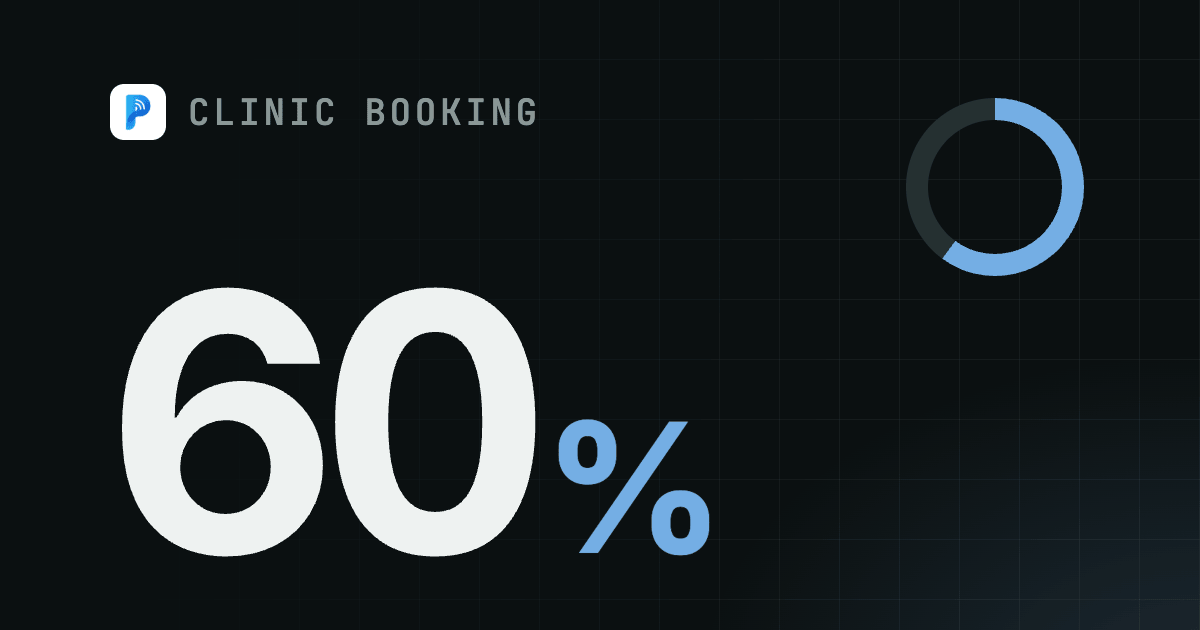
The numbers tell a stark story. According to industry benchmarks, 60% of consultation inquiries for aesthetic procedures happen outside standard business hours — evenings, weekends, and holidays. And the financial impact of each missed connection is significant: aesthetic clinics lose an estimated $150 to $300 per missed appointment when you factor in the provider's blocked time, preparation costs, and the opportunity cost of that slot.
AI voice technology is changing this equation. Not by replacing the human consultants who build trust and close bookings, but by making sure no inquiry goes unanswered and no post-treatment follow-up falls through the cracks.
The No-Show Problem Is Costing More Than You Think
Every aesthetic clinic owner knows the frustration of no-shows. But few have done the math on what it actually costs.
Industry data shows that aesthetic clinics average a 15-25% no-show rate, significantly higher than general medical practices (which hover around 5-7%). The reasons are specific to the industry:
At an average consultation value of $200, a clinic seeing 40 patients per week with a 20% no-show rate is losing roughly $1,600 weekly — over $83,000 annually in direct revenue. That doesn't account for downstream treatment revenue, which in aesthetic medicine can be 5-10x the initial consultation value.
Why Traditional Reminder Systems Fall Short
Most clinics rely on SMS reminders sent 24-48 hours before appointments. The problem? SMS open rates for clinic messages average around 45%, and the response rate for confirmation requests hovers at just 12-18%.
A text message is easy to ignore. A phone call is harder to dismiss — but staffing outbound reminder calls for dozens of patients daily is expensive and pulls front-desk staff away from in-clinic patients.
AI voice assistants solve this by making personalized confirmation calls at scale. Each call can:
Clinics using automated voice confirmation calls report no-show rate reductions of 35-50%, with the best results coming from calls made 48 hours before the appointment combined with a follow-up call on the morning of.
Capturing the 11 PM Inquiry
The aesthetic medicine patient journey doesn't follow a 9-to-5 schedule. Research from multiple clinic groups shows a consistent pattern:
| Time Window | % of Inquiries | Typical Staffing |
|---|---|---|
| 9 AM - 12 PM | 18% | Fully staffed |
| 12 PM - 2 PM | 12% | Reduced (lunch) |
| 2 PM - 6 PM | 22% | Fully staffed |
| 6 PM - 10 PM | 28% | Unstaffed or minimal |
| 10 PM - 9 AM | 20% | Unstaffed |
Nearly half of all inquiries arrive when the clinic is closed or understaffed. The traditional solution — a voicemail box or a "please call back during business hours" message — converts at near-zero rates. Prospective patients calling about aesthetic procedures want information and reassurance, not a recording.
What an AI Voice Assistant Handles at 11 PM
A well-configured AI voice system for aesthetic clinics can manage several critical tasks during off-hours:
The key metric here is conversion rate. When a prospective patient calls and reaches a live or AI-powered response versus voicemail, booking conversion rates jump from roughly 5-8% to 28-35%. That's not a marginal improvement — it's a fundamentally different business outcome.
Post-Treatment Follow-ups: The Revenue and Safety Gap
Here's where aesthetic clinics leave the most money and the most patient safety on the table.
Post-treatment follow-ups matter for two reasons:
Clinical reason: Aesthetic procedures — from Botox to laser resurfacing to surgical interventions — require monitoring. Patients need to report unusual swelling, infection signs, or unexpected reactions. Early detection of complications dramatically improves outcomes.
Business reason: Post-treatment follow-up calls are the single most effective driver of rebooking and treatment plan adherence. When a patient hears from their clinic 48 hours after a procedure, it reinforces the relationship and naturally opens the door to scheduling maintenance treatments.
Research shows that automated follow-up calls improve post-treatment compliance by 40%, and clinics that implement systematic follow-up protocols see a 25-30% increase in rebooking rates for maintenance treatments.
The Follow-up Workflow That Works
The most effective AI voice follow-up protocol for aesthetic clinics follows a structured timeline:
Each of these calls can be handled by an AI voice assistant that documents patient responses, flags concerning symptoms for immediate human review, and routes rebooking interest to the scheduling system.
Patient Privacy: A Non-Negotiable
Aesthetic medicine carries significant privacy sensitivity. Patients don't want their treatment details shared, overheard, or mishandled. This creates a specific advantage for AI voice systems: every interaction follows the exact same privacy protocol, every time.
There's no risk of a receptionist accidentally mentioning a procedure within earshot of other patients. No paper notes left on a desk. The AI system logs interactions in encrypted records, applies consistent data handling rules, and never gossips.
For clinics in Taiwan, this aligns with the Personal Data Protection Act requirements and builds patient trust in an industry where discretion is a competitive advantage.
Peak Hour Overflow: When Every Line Is Ringing
Aesthetic clinics experience predictable traffic spikes: Monday mornings (post-weekend decision-makers), lunch hours (working professionals), and the days immediately after major holidays or promotional events.
During these peaks, front-desk staff face an impossible choice: serve the patient standing in front of them, or answer the ringing phone. Every unanswered call during peak hours is a potential $200-2,000 patient walking away.
AI voice assistants function as an intelligent overflow system:
Clinics implementing this overflow model report handling 40-60% more inbound calls without adding front-desk headcount.
Implementation: What Aesthetic Clinics Should Know
Rolling out AI voice technology in an aesthetic clinic requires attention to industry-specific details.
Training Data Matters
The AI needs to understand aesthetic medicine terminology — not just the clinical terms, but the way patients describe their concerns. Patients rarely call asking about "rhytidectomy." They ask about "getting rid of these lines" or "looking less tired." The voice system needs to map casual language to clinical services accurately.
Integration Points
The highest-value integrations for aesthetic clinics are:
Measuring Success
Clinics should track these metrics before and after implementation:
Pathors provides these analytics as part of its voice AI platform, with dashboards designed specifically for clinic operations teams. The system's ability to handle Mandarin and Taiwanese Hokkien naturally makes it particularly well-suited for the diverse patient demographics that aesthetic clinics in Taiwan serve.
The Competitive Landscape Is Shifting
Aesthetic medicine in Taiwan is a $2.3 billion market growing at 8-12% annually. Competition is intensifying, and the clinics that invest in operational infrastructure — not just better lasers or more experienced doctors — are the ones capturing market share.
AI voice technology isn't a futuristic concept for this industry. It's a practical tool that addresses measurable pain points: missed calls, no-shows, incomplete follow-ups, and overwhelmed staff. The clinics adopting it now are building a compounding advantage in patient experience and operational efficiency.
The patient calling at 11 PM deserves the same quality response as the one calling at 11 AM. That's not just good technology — it's good medicine.
Aesthetic clinics operate in a high-value, high-expectation market where every missed call and every skipped follow-up has a direct financial and clinical impact. AI voice assistants address the core operational gaps — off-hours coverage, no-show prevention, systematic follow-ups, and peak-hour overflow — without requiring clinics to dramatically expand their staff.
The data is clear: clinics that answer every call, confirm every appointment, and follow up after every treatment outperform their competitors on both revenue and patient satisfaction metrics. AI voice technology makes that consistency achievable at scale.
For clinic operators evaluating this technology, the starting point is simple: measure your current no-show rate, after-hours call volume, and follow-up completion rate. Those three numbers will tell you exactly how much value is on the table.
Frequently Asked Questions
How does an AI voice assistant handle sensitive aesthetic procedure inquiries?
AI voice systems are configured with privacy-first protocols. They handle inquiries about procedures using the same discretion standards as trained staff, storing all interaction data in encrypted systems and following data protection regulations. The AI never volunteers information about a patient's history or previous treatments to unauthorized callers.
What happens if a patient reports a post-treatment emergency to the AI?
Well-configured systems include escalation protocols. If a patient describes symptoms that indicate a potential complication — such as severe swelling, signs of infection, or allergic reactions — the AI immediately flags the case and routes it to on-call clinical staff. The AI is trained to recognize urgent keywords and severity indicators specific to aesthetic procedures.
Can AI voice assistants handle consultations in multiple languages for international medical tourism patients?
Yes. Modern AI voice platforms support multiple languages and can switch between them mid-conversation. For Taiwan's aesthetic clinics that serve international patients, this means handling inquiries in Mandarin, English, Japanese, and Korean without requiring multilingual staff to be available around the clock.
How long does it take to implement an AI voice system in an aesthetic clinic?
Most implementations take 2-4 weeks from initial configuration to full deployment. The first week typically involves integrating with existing scheduling and patient management systems. The second week focuses on training the AI on clinic-specific services, pricing, and protocols. Weeks three and four involve supervised operation where AI calls are monitored and the system is fine-tuned based on real interactions.
Will patients know they're speaking with an AI instead of a human receptionist?
Transparency standards and regulations in many markets require disclosure that callers are interacting with an AI system. In practice, most patients are informed at the beginning of the call. Acceptance rates are high — studies show over 75% of patients are comfortable interacting with AI for scheduling and routine inquiries, especially when the alternative is voicemail or long hold times.