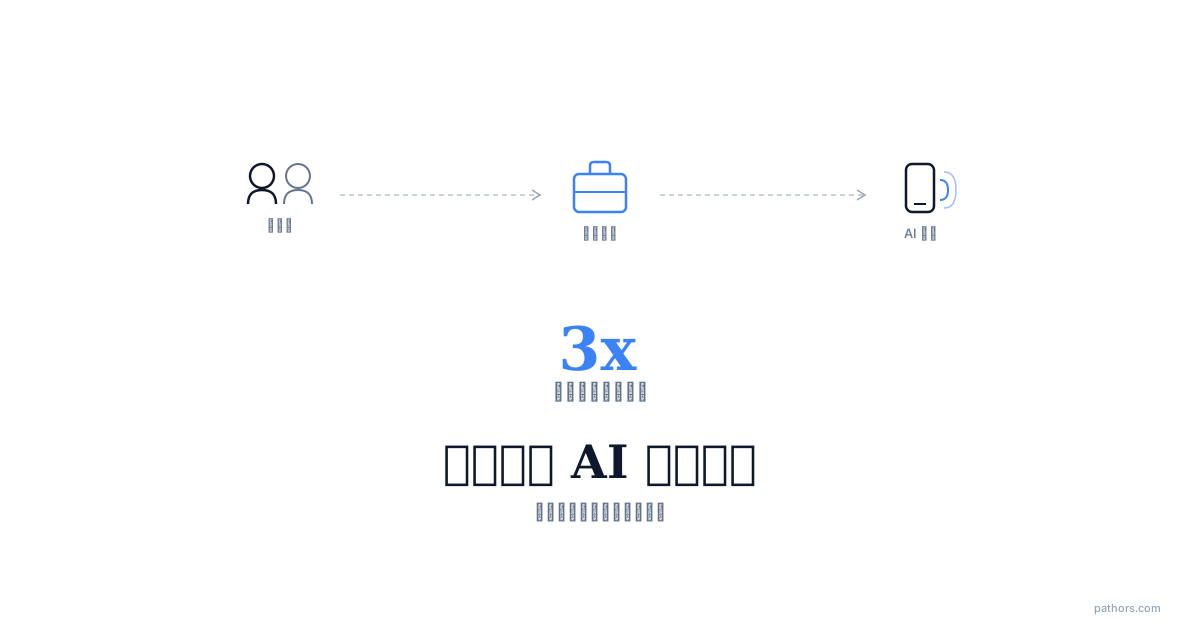
A mid-size company hiring for 15 open positions receives 800 applications per month. The recruiting team of three needs to screen each applicant, schedule phone interviews with the top 200, and coordinate on-site interviews for the final 50. The scheduling alone — calling candidates, playing phone tag, confirming times, sending reminders — consumes 40% of a recruiter's week.
LinkedIn's 2025 Global Recruiting Trends report found that the average time-to-fill has stretched to 44 days, up from 36 days in 2023. The biggest bottleneck is not finding candidates — it is the administrative overhead of moving them through the pipeline. Every day a position stays open costs the company an estimated $500-700 in lost productivity.
The Scheduling Bottleneck in Recruitment
Recruitment is fundamentally a conversion funnel. Applications come in at the top, and hires come out at the bottom. Every step that adds friction — slow response times, missed calls, scheduling conflicts — causes candidates to drop out. In a competitive talent market, speed is a recruiting advantage.
SHRM's 2025 benchmarking data shows that 52% of candidates who do not receive a response within 48 hours of applying will accept another offer or lose interest. Yet the average first-contact time for phone screening is 5-7 business days at most companies. The gap between candidate expectations and recruiter capacity is where qualified applicants disappear.
The numbers get worse at scale. A recruiter making 30 outbound calls per day to schedule interviews reaches about 18 candidates (60% answer rate). Of those, 12 confirm a time, 4 need to call back, and 2 reschedule. Each scheduling interaction takes 5-8 minutes of recruiter time. Multiply by 200 candidates per month, and scheduling alone burns 25-35 hours of skilled recruiter time.
How AI Outbound Accelerates the Recruiting Pipeline
Initial candidate outreach. The AI calls applicants within hours of application, not days. It introduces the role, confirms interest, and asks basic screening questions (availability, salary expectations, location preferences, visa status). Candidates who meet the criteria are immediately offered interview slots. Those who do not are politely informed with a timeline for next steps.
Interview scheduling. The AI accesses recruiter and hiring manager calendars in real time, offering candidates available slots. It handles the back-and-forth of finding a mutually convenient time in a single call, eliminating days of email ping-pong. Pathors clients report reducing scheduling time from 5-7 days to under 24 hours.
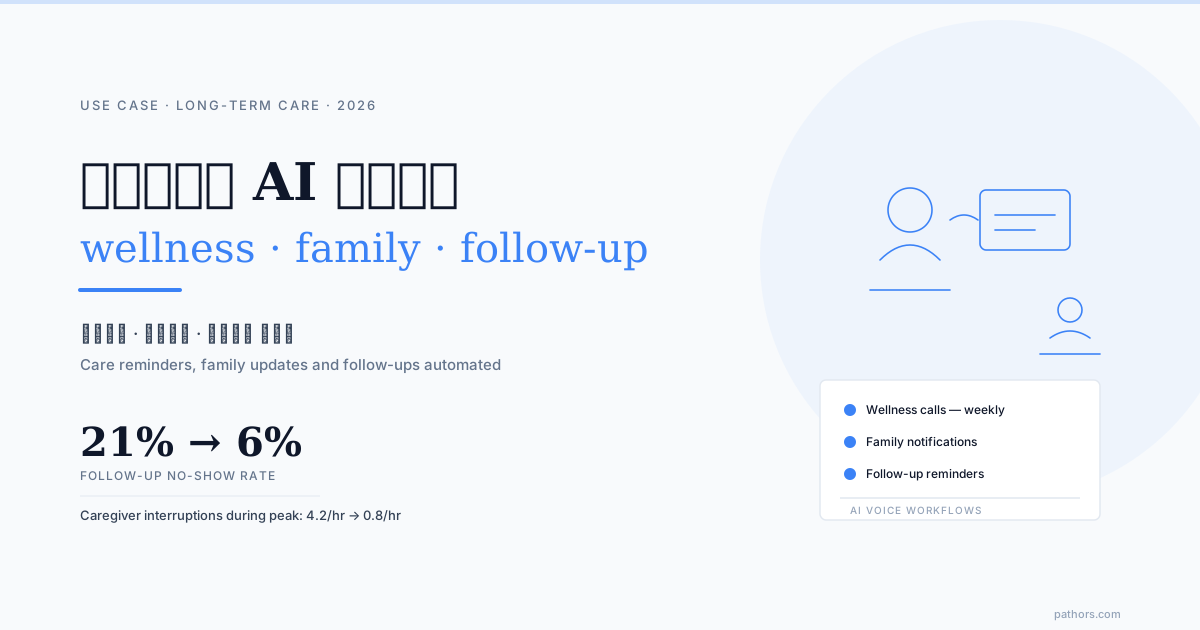
Reminder calls and no-show reduction. The AI calls candidates 24 hours before their interview with a reminder and logistics (location, what to bring, parking info). Interview no-show rates drop from the industry average of 20-30% to under 8% with AI reminders.
Bulk screening for high-volume roles. For positions that generate hundreds of applications (retail, food service, customer support), the AI can conduct basic phone screens at scale — verifying availability, experience level, and interest — and rank candidates for human recruiter review.
Impact on Recruiting Metrics
| Metric | Manual Process | With AI Outbound | Change |
|---|---|---|---|
| Time to first contact | 5-7 days | <24 hours | -80% |
| Scheduling time per candidate | 15-20 min | 2-3 min | -85% |
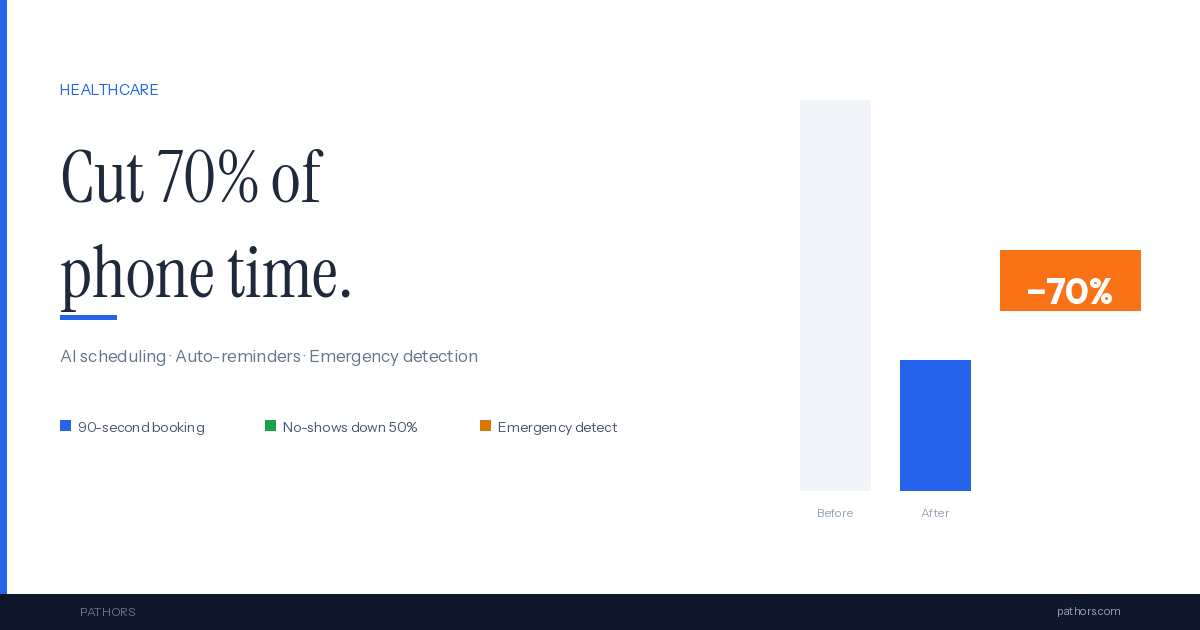
| Interview no-show rate | 20-30% | 6-8% | -70% |
| Recruiter hours on scheduling/week | 15-20 hr | 3-4 hr | -80% |
| Candidate satisfaction (survey) | 3.2/5 | 4.1/5 | +28% |
Candidate Experience Matters
A common concern: will candidates feel devalued by talking to AI? The data says the opposite. Candidates prefer fast, reliable communication over waiting days for a human callback. The AI is transparent about being an AI assistant, and candidates appreciate the immediate response and efficient scheduling. In post-interview surveys from Pathors clients, 78% of candidates rated the AI scheduling experience as "good" or "excellent."
The key is that AI handles the administrative steps, freeing recruiters for the high-value conversations: evaluating cultural fit, selling the opportunity, and making hiring decisions.
Every day a position stays open is a day of lost productivity. Every qualified candidate who drops out because scheduling took too long is a hiring failure that could have been prevented. AI outbound for recruiting is not about replacing recruiters — it is about letting them do the work that actually requires human judgment, while the AI handles the calendar coordination that consumes their weeks.
Frequently Asked Questions
Can the AI handle screening questions specific to our roles?
Yes. Pathors allows custom screening scripts per job opening. You define the questions, required answers, and disqualification criteria. The AI conducts the screen and tags candidates with their responses for recruiter review.
How does the AI access recruiter calendars?
Pathors integrates with Google Calendar, Microsoft Outlook, and major ATS platforms via API. The AI reads available slots in real time and books confirmed interviews directly into the calendar with all relevant details.
What if a candidate prefers to speak with a human recruiter?
The AI offers to transfer the call at any point. For candidates who request human contact, it schedules a callback with the assigned recruiter and sends the recruiter a summary of the conversation so far.